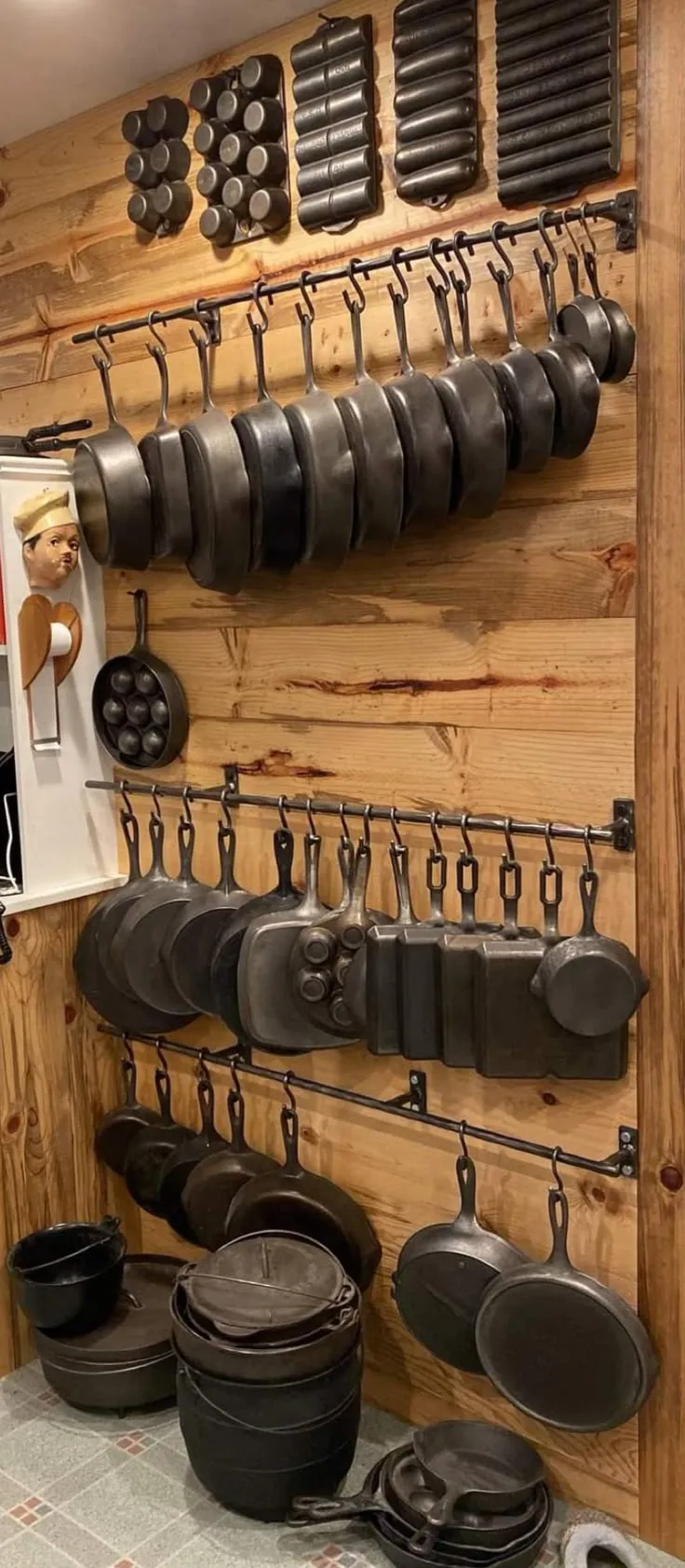
Cast Iron Over Cookbooks: The Real Tools Behind Every Great Southern Kitchen
Walk into most Southern kitchens and you'll notice something right away: the shelves aren't loaded with glossy cookbooks. There might be one dog-eared binder held together with a rubber band, or a recipe box with index cards so stained you can barely read the handwriting. But on the stove — or hanging from a rack above it — you'll find something far more valuable. A cast iron skillet, black as midnight and slick as glass, that's been in the family longer than anyone can remember.
That skillet isn't just cookware. It's a philosophy.
The Tool IS the Recipe
Southern cooking has always been rooted in feel, instinct, and repetition rather than precision. When your grandmother made cornbread, she didn't preheat a baking dish to 375 degrees — she dropped a pat of butter into her cast iron, watched it foam, and knew by the sound of the sizzle whether the pan was ready. That knowledge didn't come from a book. It came from the pan itself.
This is the core idea behind what you might call the barefoot pantry philosophy: instead of chasing the latest kitchen gadget or buying a new cookbook every season, you invest deeply in a handful of quality tools and you learn them the way you'd learn a language. Fluently. Without thinking.
A well-seasoned cast iron skillet is the best example, but it's not the only one. The tools that earn permanent real estate in a Southern kitchen share a few common traits — they're durable, they're versatile, and they actually improve with age and use. That's a short list of requirements, but it narrows things down considerably.
What Actually Lives on a Southern Stovetop
Let's talk specifics. If you're building a Southern kitchen from scratch — or clearing out the clutter from one that's gotten away from you — here's where serious cooks tend to land.
The cast iron skillet. This one goes without saying, but it deserves to be said anyway. A 10 or 12-inch cast iron skillet can fry chicken, bake cornbread, sear a pork chop, make a pan gravy, and roast vegetables without breaking a sweat. It goes from stovetop to oven without complaint. It holds heat like nothing else on the market. And the more you cook in it, the better it gets — a quality that almost nothing else in life can claim.
A heavy Dutch oven. Whether it's enameled cast iron or bare, a good Dutch oven is where braises happen, where beans get cooked low and slow, where big batches of stew come together on a Sunday afternoon. If the skillet is the workhorse, the Dutch oven is the long-haul truck. You want it big enough to feed a crowd and heavy enough to hold a steady temperature for hours.
A carbon steel or well-seasoned stainless skillet. Some folks swear by carbon steel as a lighter alternative to cast iron that still develops a natural nonstick surface over time. Others keep a stainless pan around for deglazing and making pan sauces. Either way, having a second skillet in the rotation gives you flexibility without overcomplicating things.
A large wooden spoon and a fish spatula. These are the hand tools that matter. A sturdy wooden spoon for stirring, scraping, and tasting. A thin, flexible fish spatula for flipping everything from cornbread to fried eggs to catfish fillets without tearing anything apart. Two tools. That's the whole drawer.
Why Gadgets Don't Make the Cut
There's a reason Southern cooks tend to be skeptical of unitaskers — those single-purpose gadgets that take up drawer space and only come out once a year. An avocado slicer doesn't teach you anything. An electric egg cooker doesn't build any skill. But learning to fry an egg properly in a cast iron pan — getting the heat right, knowing when to flip, understanding when to leave it alone — that's a lesson that transfers to a hundred other things you'll cook.
The accumulation of gadgets is, in a lot of ways, the opposite of Southern cooking wisdom. It's the idea that the right tool will do the work for you, rather than the idea that you become the right cook through the tools you practice with. Southern kitchens have always leaned toward the latter.
That doesn't mean modern equipment has no place. A good instant-read thermometer is genuinely useful. A sturdy cutting board is non-negotiable. But the core of the kitchen — the thing that actually produces the food — should be simple, proven, and well-used.
Taking Care of What Takes Care of You
Here's the other thing about Southern kitchen tools: they require a relationship. Cast iron needs to be dried properly and given a light coat of oil after washing. A Dutch oven needs its lid checked for chips if it's enameled. A wooden spoon shouldn't soak in water. These aren't burdens — they're habits. And the act of caring for your tools keeps you connected to them in a way that a non-stick pan you'll throw away in two years never will.
There's something grounding about it, honestly. Wiping down a skillet after dinner, running your hand across the surface, hanging it back up — it's a small ritual, but it matters. It's the kind of thing that turns a kitchen from a room where food gets made into a place where something real happens.
Start With One Good Pan
If you're newer to Southern cooking and you're trying to figure out where to begin, here's the simplest possible advice: skip the cookbook for now. Go find a good cast iron skillet — a new Lodge, a vintage Griswold from an antique store, whatever you can get your hands on — and start cooking in it every single day.
Fry some eggs. Make cornbread. Cook a pork chop. Let it get a little smoky. Learn how it holds heat, how it responds to different temperatures, when to add oil and when not to. After a few months, that pan will know your cooking as much as you know it.
That's the barefoot pantry in a nutshell. Not a shelf full of instructions, but a handful of tools you actually trust — and the quiet confidence that comes from knowing how to use them.