The Real Cost of Fast: Why Slow Southern Cooking Is the Smartest Money You'll Ever Spend on Food

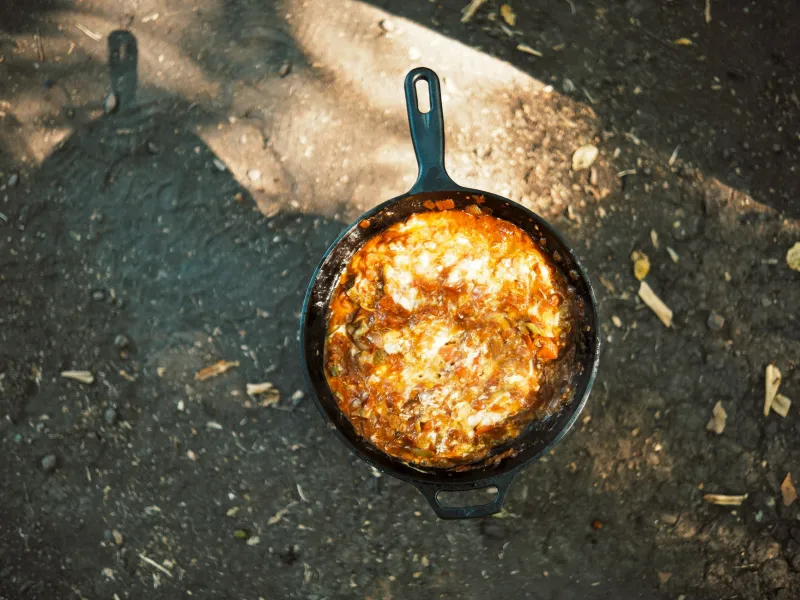
Photo by Photo by logan jeffrey on Unsplash on Unsplash
Let me tell you something that Southern grandmothers have known for a hundred years and that modern convenience culture keeps trying to make you forget: speed costs money. Not a little money — a lot of money. And the food you get in exchange for paying that premium is, almost without exception, worse than what you could have made yourself for a fraction of the price.
This isn't nostalgia talking. It's arithmetic.
The average American household spent over $3,600 on food away from home in 2023, according to Bureau of Labor Statistics data. That's roughly $70 a week on restaurant meals, delivery apps, and drive-throughs — food that's gone in twenty minutes and leaves you hungry again by 9 p.m. Meanwhile, the Southern tradition of low-and-slow cooking, batch cooking, and ingredient stretching — the kind of cooking that's been feeding large families on modest budgets for generations — can feed a family of four for less than half that amount, with food that's genuinely better.
I'm not asking you to give up every convenience. I'm asking you to look at the math honestly, because the math is striking.
What You're Actually Paying For at the Drive-Through
A family of four at a fast food restaurant — let's say a burger chain, which is about as cheap as fast food gets — is spending somewhere between $35 and $50 per visit once you add drinks, sides, and the obligatory upsell. Do that three times a week and you're at $450 to $600 a month. On fast food. Food that took twelve minutes to eat.
Delivery apps are even worse. The same meal you'd pay $40 for at the restaurant costs $60 to $70 by the time you add delivery fees, service fees, and the tip that you feel obligated to leave because someone drove it to your door. The convenience is real, but the markup is brutal.
Now let's look at the other side of the ledger.
The Southern Slow Cook Budget
A pork shoulder — the kind you'd use for pulled pork, which feeds six to eight people easily — costs between $10 and $18 at most grocery stores. Add a bottle of apple cider vinegar, some spices from the pantry, and a bag of buns, and you're feeding eight people for under $25. That same meal from a barbecue restaurant, even a modest one, would run $80 to $120 for the same group.
A pot of red beans and rice, a Monday tradition in New Orleans and much of the Gulf South, costs roughly $8 to $12 in ingredients and feeds a family of four with leftovers. A slow-cooked pot of chicken and dumplings — whole chicken, flour, butter, broth — lands around $12 to $15 and easily serves six. A big pot of collard greens with a smoked ham hock costs maybe $7 and goes alongside everything for days.
These aren't poverty meals. They're some of the most satisfying, deeply flavored food in American cuisine. The low cost isn't a compromise. It's a feature.
The Stretch Kitchen as Economic Strategy
What makes Southern cooking particularly efficient isn't just the individual dish — it's the system. The tradition of cooking once and eating multiple times is built into the DNA of Southern food culture, and it's one of the most effective money-saving strategies in any kitchen.
That pork shoulder becomes Sunday dinner, Monday sandwiches, and Tuesday morning hash with fried eggs. The chicken carcass from Sunday's roast bird becomes the stock for Wednesday's soup. The leftover cornbread crumbles into a Thursday dressing. Nothing gets wasted because everything has a next life.
Food economists call this "ingredient utilization." Southern cooks just call it making do — and making it good.
A whole chicken, which costs around $7 to $10 depending on your market, can realistically produce four distinct meals for a household of two: a roasted dinner, a pot of soup, chicken salad sandwiches, and a fried rice or stir-fry with the last bits of meat. That's roughly $2 to $2.50 per meal. There is no fast food option that competes with that number.
The Time Argument (and Why It's Mostly Wrong)
Here's where people push back: I don't have time to cook slow. And I understand the feeling — modern life is genuinely busy, and the appeal of a meal that's ready in fifteen minutes is real.
But slow cooking doesn't require you to stand over a stove. A pork shoulder in a slow cooker takes about ten minutes of active prep time. You put it in before work, you come home to dinner. A pot of beans simmers on the stove with almost no attention required. Batch cooking on a Sunday afternoon — a few hours of focused kitchen time — can produce meals for the entire week.
The time investment is front-loaded, not constant. And once you've got a pot of something on the stove or in the slow cooker, you're free. The food is doing the work.
What fast food actually sells is not time saved — it's the feeling of time saved. When you account for the drive, the wait, and the decision fatigue of figuring out where to go, a home-cooked slow meal often takes less total time than a drive-through run.
Building a Slow Cook Week on a Real Budget
Here's a rough sketch of what a slow-cook week looks like in practice, built around Southern staples:
Sunday: Slow-roasted pork shoulder with black-eyed peas and cornbread. Total cost: approximately $22. Serves 6.
Monday: Red beans and rice made with Sunday's pork drippings. Total cost: approximately $5 in additional ingredients. Serves 4 with leftovers.
Tuesday: Pork shoulder sandwiches with slaw. No additional protein cost — you're using Sunday's leftovers.
Wednesday: Chicken and vegetable soup made from a whole chicken and pantry staples. Total cost: approximately $12. Serves 4 to 6.
Thursday: Chicken salad on toast using remaining chicken. Minimal additional cost.
Friday: Leftover soup plus fresh cornbread. Cost of cornbread ingredients: approximately $2.
Total approximate spend for the week: $41. Fed four people, mostly twice per meal. That's roughly $10 per person for the week — about $1.40 per person per meal.
Compare that to $70 a week at fast food, and you're saving $1,500 a year. That's not a rounding error. That's a real number with real consequences for a household budget.
The Case for Slowing Down
The Southern slow cook tradition wasn't invented as a financial strategy. It came from necessity, from community, from the pleasure of food that's been given time to become something great. But it turns out that the same qualities that make slow Southern cooking culturally rich — patience, resourcefulness, respect for ingredients — also make it economically intelligent.
The barefoot approach to food has never been about deprivation. It's about understanding that the best things take time, that good ingredients treated well go further than expensive shortcuts, and that the table you set at home — with food you cooked yourself, slow and with intention — is worth more than anything you'll ever pick up at a window.
The math just confirms what Southern kitchens already knew.