Take It Outside: Building an Outdoor Cooking Setup You'll Actually Use All Year
At some point every summer, the indoor kitchen becomes the enemy. The oven runs hot. The stove throws heat you don't need. The whole house smells like whatever you cooked three days ago, and stepping outside to get away from it just makes you realize that's where you should've been cooking all along.
Southerners figured this out a long time ago. The summer kitchen—a separate outdoor cooking space used to keep heat and smoke out of the main house—is one of the oldest traditions in Southern domestic life. Plantation-era kitchens were often entirely detached structures. Even modest farmhouses had covered outdoor cooking areas where the bulk of the summer cooking happened. The idea isn't new. What's new is that people are coming back to it, and doing it in ways that range from dead simple to seriously impressive.
Here's how to think about building your own outdoor cooking setup, wherever you're starting from.
Start With What You Actually Cook
Before you buy a single thing, spend five minutes thinking about how you actually cook. Not how you want to cook—how you actually cook.
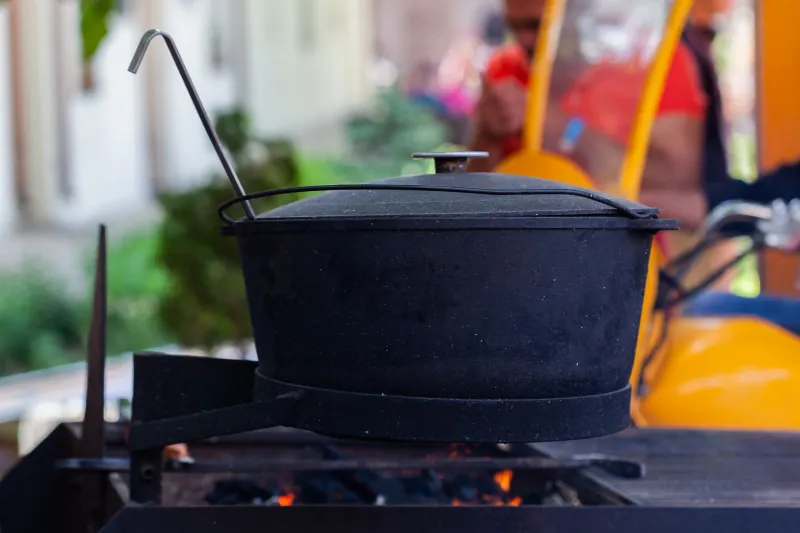
If most of your meals involve a skillet and a burner, you need a propane setup or a good grill with a side burner. If you smoke meat every weekend, you already have the anchor piece and just need to build around it. If you cook big pots of things—stews, gumbos, low-country boils—you want a high-BTU outdoor burner, sometimes called a crawfish burner, which you can find at any Southern hardware store and most big-box retailers for under sixty dollars.
The mistake people make is starting with the setup they've seen in a magazine rather than the one that fits their cooking. A beautiful outdoor kitchen with a built-in grill and granite countertops does nothing for you if you make cornbread and cast iron chicken. Match the setup to the food.
The Simplest Possible Version: A Fire Pit and a Grate
If you want to start cooking outside without spending much money, a basic fire pit and a heavy-duty grate will get you further than you'd think.
You can buy a simple steel fire ring for under forty dollars, or build one from cinder blocks in an afternoon. Set a grate across it—the kind used for campfire cooking, available at any outdoor supply store—and you've got a cooking surface that'll handle a cast iron skillet, a Dutch oven, a pot of beans, or a whole chicken. The learning curve is real, because fire cooking requires you to manage heat differently than a gas burner, but once you get it, there's no going back.
Fire pit cooking also gives you something a gas setup can't: flavor. Wood smoke changes food in ways that are hard to explain and easy to taste. Start with hardwoods like oak or hickory. Avoid anything treated or painted. Let the fire burn down to coals before you cook anything—flames are for starting fires, coals are for cooking.
The Middle Ground: A Covered Outdoor Cooking Station
If you want something more functional and weather-resistant, think about building or buying a covered outdoor station. This doesn't have to be elaborate. A metal roof on four posts, a sturdy table or countertop, and a couple of heat sources will handle almost any cooking situation.
For heat sources at this level, consider combining a two-burner propane setup with a charcoal grill. The propane handles your everyday cooking—boiling water, making sauces, reheating things—while the charcoal handles anything that benefits from smoke and time. A basic Weber kettle grill costs around a hundred dollars and will outlast furniture you paid ten times as much for.
Cover your workspace. This is the single most important upgrade you can make to any outdoor cooking setup. A roof—even a simple one—means you can cook in light rain, cook in the blazing afternoon sun without squinting at your food, and keep your equipment from rusting out. It also defines the space. Once there's a roof over it, it becomes a place, not just a spot in the yard.
Going Further: The Outdoor Oven
If you want to get serious, build or buy an outdoor oven. This is where outdoor cooking stops being an alternative to indoor cooking and starts being genuinely superior.
Wood-fired outdoor ovens—the kind used for pizza but equally good for bread, roasted meats, and casseroles—can be built from firebrick and mortar for a few hundred dollars in materials if you're willing to do the work yourself. There are also prefabricated clay and ceramic oven kits available online that sit on a stand and don't require any masonry knowledge. They're not cheap, but they last decades.
A wood-fired oven gets hotter than any indoor oven you'll ever own. It holds that heat for hours. It gives bread a crust you cannot replicate on a standard range. Cooking in one changes the way you think about what an oven is supposed to do.
Making It a Space, Not Just a Station
The best outdoor cooking setups feel like places you want to be, not just places where cooking happens. That distinction matters more than any piece of equipment.
Add seating. Even a couple of old chairs pulled close to the cooking area changes the dynamic—people will gather, and gathering while someone cooks is one of the great Southern pleasures. Put a shelf or a small table nearby for ingredients, tools, and whatever you're drinking. String some lights if you cook into the evening. Keep it easy to sweep out and hose down.
The outdoor kitchen doesn't need to be fancy. It needs to be comfortable. It needs to feel like the kind of place where you'd spend a whole Saturday without meaning to.
Cooking Outside in the Off-Season
Here's the part nobody tells you: once you build an outdoor cooking setup, you won't stop using it when summer ends. Fall is arguably the best outdoor cooking season in the South—cool enough to stand near a fire without sweating through your shirt, warm enough that you don't need a coat. Winter has its moments too, especially for anything that benefits from a long, slow fire.
Keep a tarp or weatherproof cover for your equipment. Keep dry wood or propane stocked. Keep a cast iron skillet outside permanently, because cast iron doesn't care what month it is.
Cooking outside year-round isn't a commitment to a lifestyle. It's just a decision to cook where the air is better, the company tends to drift toward you on its own, and nobody has to worry about what the kitchen smells like later.
Take your shoes off. Get the fire going. The inside can wait.