Shade, Air, and a Good Spot: The Southern Tradition of Keeping Ingredients Out Back
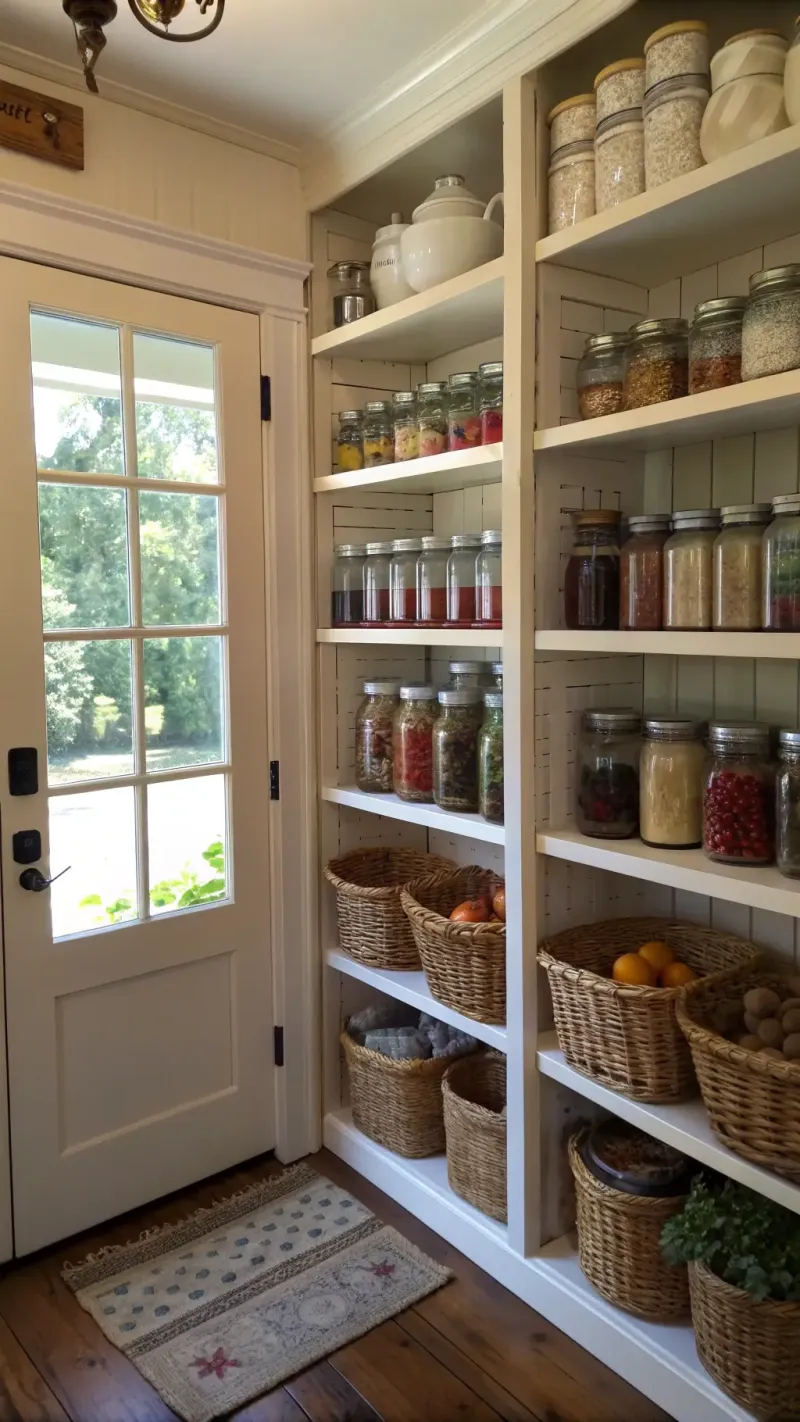
Photo: rustic Southern porch with mason jars vegetables and pantry storage shelves, via jennaliving.com
Walk up to just about any older Southern home and you'll notice something before you even knock on the door. There's stuff everywhere—in the good way. A crock of something on the porch steps. A mesh bag of sweet potatoes hanging off a nail. A row of mason jars catching the afternoon light behind a screen. Nobody put those things there by accident. That's a working pantry, and it's been doing its job longer than most modern kitchens have existed.
The Southern outdoor pantry isn't a trend or a farmhouse aesthetic choice. It's a practical system built over generations, shaped by climate, geography, and the kind of cooking that happens when you need to feed a lot of people with what you've got on hand. And while it might look casual—because it is—there's real logic behind every shelf, hook, and shaded corner.
Why Outside Makes Sense in the South
Here's the thing about Southern weather: it's not always your enemy when it comes to food storage. Yes, the summers are brutal. But fall, winter, and early spring in most of the South offer something a lot of people overlook—long stretches of cool, dry air that happen to be just about perfect for storing root vegetables, cured meats, dried beans, and preserved goods.
Before refrigeration was widespread, families didn't have the luxury of tossing everything in a cold box. They paid attention to what the air was doing. A screened porch on the north side of a house stays noticeably cooler than the interior during shoulder seasons. A root cellar dug into a hillside maintains a fairly steady temperature year-round. Even a shaded corner of a covered porch—the kind with a tin roof that catches every breeze—can hold potatoes and onions in better shape than a warm kitchen cabinet ever could.
That knowledge didn't disappear. It just got passed down quietly, the way most useful Southern knowledge does.
What Actually Belongs Out There
Not everything is a candidate for outdoor storage, but more things qualify than you might think.
Root vegetables are the obvious starting point. Sweet potatoes, white potatoes, turnips, and beets all prefer cool, dark, and ventilated conditions—exactly what a shaded porch or a cellar provides. Keep them in wooden crates or burlap sacks, never plastic bags, and they'll hold through winter without much fuss.
Onions and garlic are classic porch candidates. Braid them or hang them in mesh bags where air can circulate freely. A cool, dry porch keeps them firm and potent far longer than a kitchen drawer.
Dried beans and field peas store beautifully in glass jars or cloth sacks in any space that stays below 70 degrees and away from moisture. A lot of families keep their heirloom bean varieties this way—the ones that don't show up in any grocery store—passed along in repurposed jelly jars with handwritten labels.
Canned and preserved goods are practically made for the porch. Jams, pickles, relishes, and pressure-canned vegetables do best in stable, cool conditions out of direct sunlight. A wooden shelf on a covered porch or a spot in a root cellar is ideal. Many Southern families have a dedicated "canning shelf" that gets restocked every fall and slowly depleted through the year like a savings account you actually enjoy spending.
Cured meats and sausages have a long history of hanging in smokehouses, but plenty of families still hang country hams and link sausages in cool outbuildings or well-ventilated porches during the colder months. It's one of those things that sounds rustic until you taste the ham at Easter.
Seasons Change the Rules
The outdoor pantry isn't a set-it-and-forget-it system. You move with the seasons. What works in January in Tennessee doesn't work in July in South Carolina. Experienced outdoor pantry keepers know their own microclimates—which corner of the porch gets morning shade, where the temperature drops fastest after sundown, when the humidity spikes and things need to come inside.
Summer is when the outdoor pantry mostly hibernates for fresh goods, though covered porches can still handle dried and preserved items if you're careful about heat and moisture. Fall is when the whole system kicks back into gear—the harvest comes in, the canning jars get filled, and the root vegetables go into storage. Winter is prime time. Spring is when you start working through what's left and making decisions about what held up and what didn't.
That seasonal rhythm isn't just practical. It keeps you connected to what you're cooking and where it came from in a way that a refrigerator full of plastic-wrapped produce never quite does.
Stories From the Back Porch
Readers of Barefoot Bubba's have been sharing their own outdoor pantry traditions, and they're worth sitting with for a minute.
One reader from East Tennessee described a corner of her grandmother's root cellar that was reserved entirely for dried apple rings—strung on twine and hung from the ceiling beams. "She'd make stack cake in the dead of winter with those apples," she wrote, "and it tasted like summer had been sitting down there waiting the whole time."
Another reader, from the Mississippi Delta, keeps his smoked sausage and tasso in a small outbuilding his grandfather built specifically for the purpose. "It's not fancy. Concrete floor, wood walls, one window with a screen. But that building has been holding meat since before I was born, and nothing I've ever bought at a grocery store tastes like what comes out of it."
A reader in coastal Georgia talked about her screen porch shelf of pickled goods—watermelon rind, green tomatoes, bread-and-butter cucumbers—lined up in the order she put them up. "I always know what's left of summer by counting the jars," she said.
Getting Started If You're New to This
You don't need a root cellar or a smokehouse to start thinking like an outdoor pantry keeper. Start with what you've got. A shaded porch corner with a wooden shelf can hold onions, garlic, and dried beans through the cool months without any special equipment. A few sturdy hooks can hold a mesh bag of sweet potatoes. A small wooden crate keeps potatoes off the ground and lets air move around them.
Pay attention to your space. Notice where it stays coolest. Notice where moisture collects after rain. Let the space tell you what it can handle, and start small.
The outdoor pantry isn't about perfection. It's about using what you've got—your climate, your porch, your corner of the South—to keep good ingredients close and your cooking grounded in something real. That's as Barefoot Bubba's as it gets.