Why Your Outdoor Kitchen Quits in August (And How to Build One That Doesn't)
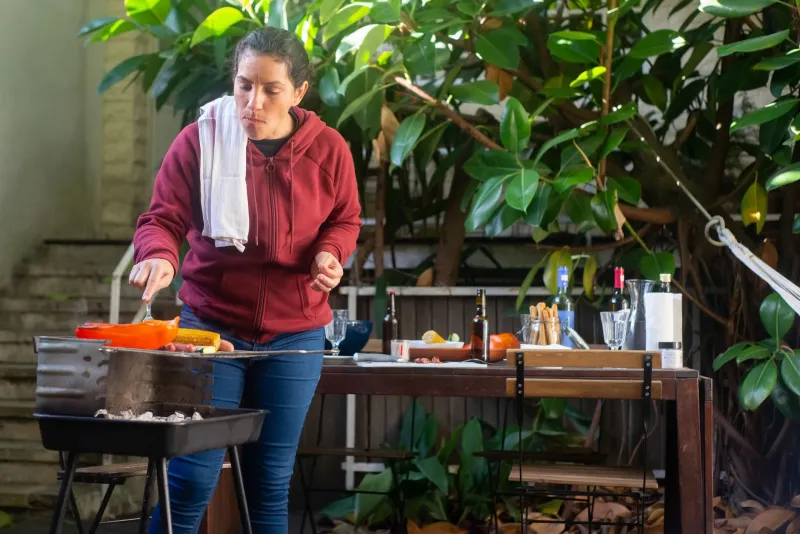
Spring is a powerful motivator. The weather turns, the days get longer, and suddenly every backyard looks like it could be a cooking destination. People buy grills, set up folding tables, string up lights, and imagine themselves feeding a crowd every weekend through October.
Then August arrives. The heat is brutal, the equipment has taken a beating, and the setup that looked so promising in April has developed a list of problems nobody planned for. The side burner doesn't ignite reliably. The prep table wobbles on the uneven patio. The whole station faces west, which means you're staring directly into the afternoon sun while trying to flip chicken. The cooler is too far from the grill. The trash situation has become a genuine issue.
This is the summer kitchen graveyard—and it happens in backyards all over the South every single year. The good news is that most of these failures are entirely preventable.
The Equipment Mistakes That Show Up Fast
Let's start with gear, because that's where most people spend their money and make their most avoidable mistakes.
Buying for the price tag instead of the construction. Entry-level grills and outdoor burners are tempting because they're cheap. They're also often built with thin steel, flimsy grates, and hardware that starts rusting the second it sees humidity—which, in the South, is approximately always. A grill that looks fine in the store parking lot in March will show you its true character by July.
Cast iron grates hold heat better and last longer than thin steel. Stainless steel components resist corrosion better than painted or coated alternatives. These aren't luxury upgrades; they're the difference between a setup that works in year three and one that's falling apart by Labor Day.
Underestimating the side burner. A lot of outdoor cooking setups include a side burner as an afterthought, and a lot of outdoor cooks use it that way too—until they realize how much work it can carry. Keeping a pot of water hot for corn, warming up beans, reducing a sauce while something smokes—the side burner is a workhorse if it's a good one. A cheap side burner with an igniter that quits working in high humidity is just a frustration mounted to your grill cart.
Not thinking about heat management. Big Southern cooks—smoking, low-and-slow barbecue, whole-animal cooking—require the ability to manage fire over long periods. A setup that only gives you high heat or off isn't built for this. If slow cooking is part of your outdoor repertoire, your equipment needs to support it. That might mean a dedicated offset smoker, a ceramic cooker, or at minimum a grill with a large enough firebox to set up true two-zone cooking.
The Layout Problems Nobody Notices Until Mid-Summer
Equipment is half the problem. The other half is spatial—how everything is positioned relative to everything else, and relative to the sun, the house, and wherever people naturally congregate.
Facing the wrong direction. In the South, afternoon sun comes from the west and it is not gentle. If your grill faces west, you'll be squinting into direct sun during the exact hours you're most likely to be cooking. Walk your backyard at 4 p.m. on a July afternoon before you decide where anything goes. Set up where the shade is, or where you can create it.
Putting the prep area too far from the grill. A prep table that's six feet from the grill sounds fine in theory. In practice, you'll spend the whole cookout making small trips back and forth while something on the grill needs attention. Everything that supports active cooking—cutting board, seasonings, tongs, a plate for resting meat—needs to be within arm's reach of where the fire is.
No defined trash and waste zone. This sounds minor until you're hosting twenty people and there are paper plates, corn cobs, and empty beer cans with nowhere to go except a single small bin that fills up in forty-five minutes. Before you cook your first meal in a new outdoor setup, figure out where waste goes. A dedicated trash station with a lid—to keep flies and heat from making it worse—should be part of the plan, not an afterthought.
Ignoring drainage. Water has to go somewhere. If your outdoor cooking area doesn't drain naturally, you'll end up with puddles under your grill, mud around your prep area, and a general mess after any rain. Gravel, pavers, or a slight grade away from your setup all help. A flat concrete pad with no drainage is a problem waiting to happen.
What Lasts and What Doesn't
The outdoor setups that make it to October—and beyond—share a few common traits.
They're built for the actual climate. In the South, that means tolerating humidity, UV exposure, afternoon heat, and the occasional violent thunderstorm. Materials matter enormously. Wood prep tables need to be sealed and maintained. Fabric covers need to be secured or stored when weather moves in. Anything that can rust, will rust.
They're simple enough to maintain. The more complex and elaborate a setup, the more there is to break, clean, and maintain. A straightforward setup with quality equipment beats an elaborate one with mediocre parts every single time. One great grill and a solid prep surface will serve you better than a full outdoor kitchen built with budget components.
They have shade. Whether it's a pergola, a shade sail, a large umbrella, or a natural tree canopy, shade is not optional in the Deep South if you want to use your outdoor kitchen past 2 p.m. in July. Build for it or add it early—retrofitting shade onto an existing setup is always more expensive and awkward than planning for it from the start.
Setting It Up to Actually Last
Before you buy anything, spend a week paying attention to your backyard. Where does the sun hit hardest and when? Where do people naturally gather? Where does water pool after rain? Where's the logical path between your indoor kitchen and your outdoor setup?
Answer those questions first. Then buy equipment that's built for Southern weather rather than for a price point. Then set up your layout so that the things you reach for constantly are close, the waste has a home, and you're not cooking into the sun.
Do those three things and your outdoor kitchen won't end up in the graveyard with everyone else's. It'll still be running come October, which is honestly when the best outdoor cooking weather finally arrives anyway.